
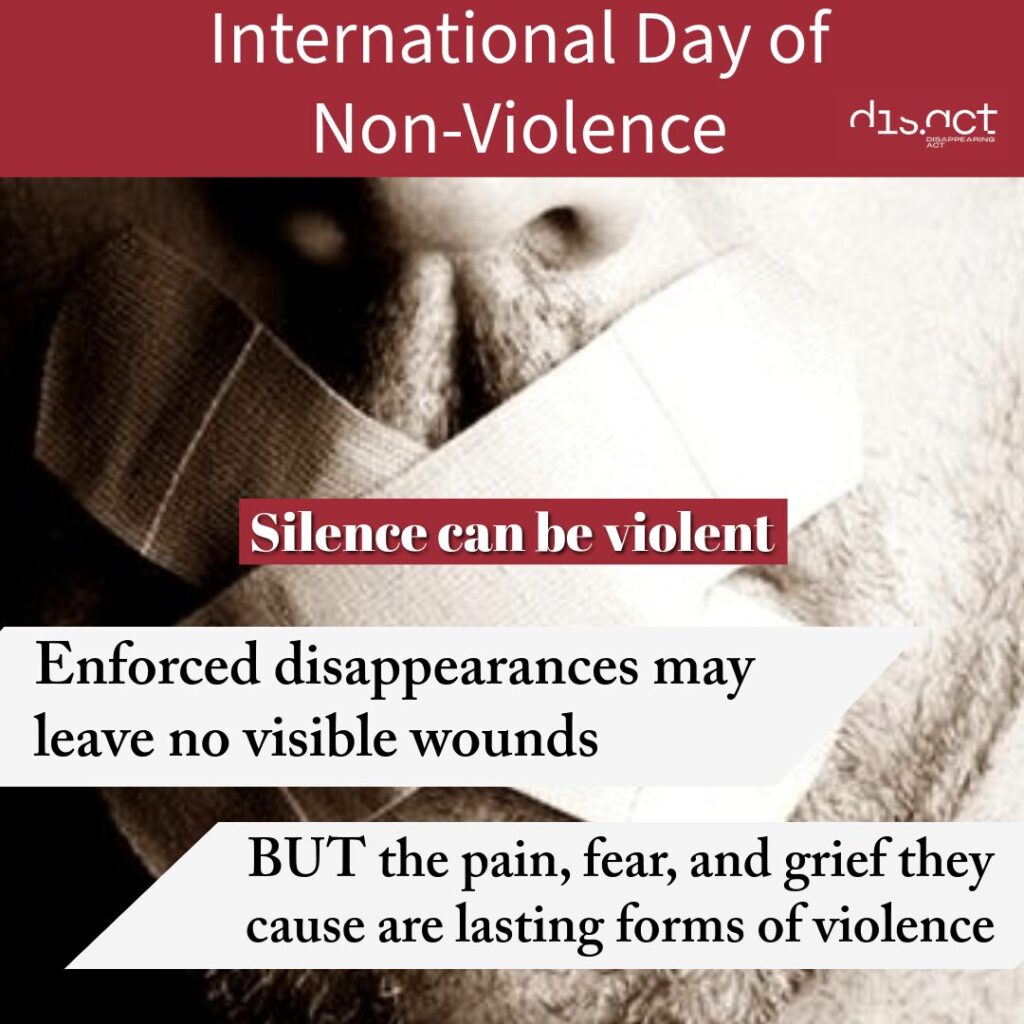
On October 2, the world honoured the birthday of Mahatma Gandhi, reaffirming the commitment to peace, dignity, and justice through the International Day of Non-Violence.
Yet non-violence is not limited to the absence of physical harm. It requires confronting structural forms of violence, exposing their mechanisms, and building systems that prevent their recurrence.
Enforced disappearances epitomise this challenge. They are violence against victims—removed from both public life and official record. They are violence against families—condemned to uncertainty and anguish. And they are violence against communities—fracturing trust and obstructing reconciliation across generations.
Through the ERC-funded DISACT project, we investigate how enforced disappearances function as political tools across different contexts: colonial, authoritarian, conflict, and post-conflict. By combining comparative political analysis with innovative AI-driven methods that integrate fragmented human rights data, we aim to map these patterns and strengthen transitional justice mechanisms designed to confront them.
The legacy of Gandhi calls on us not only to reject violence but to challenge the silences and erasures that perpetuate it across time. This commitment remains urgent—on October 2 and every day.