
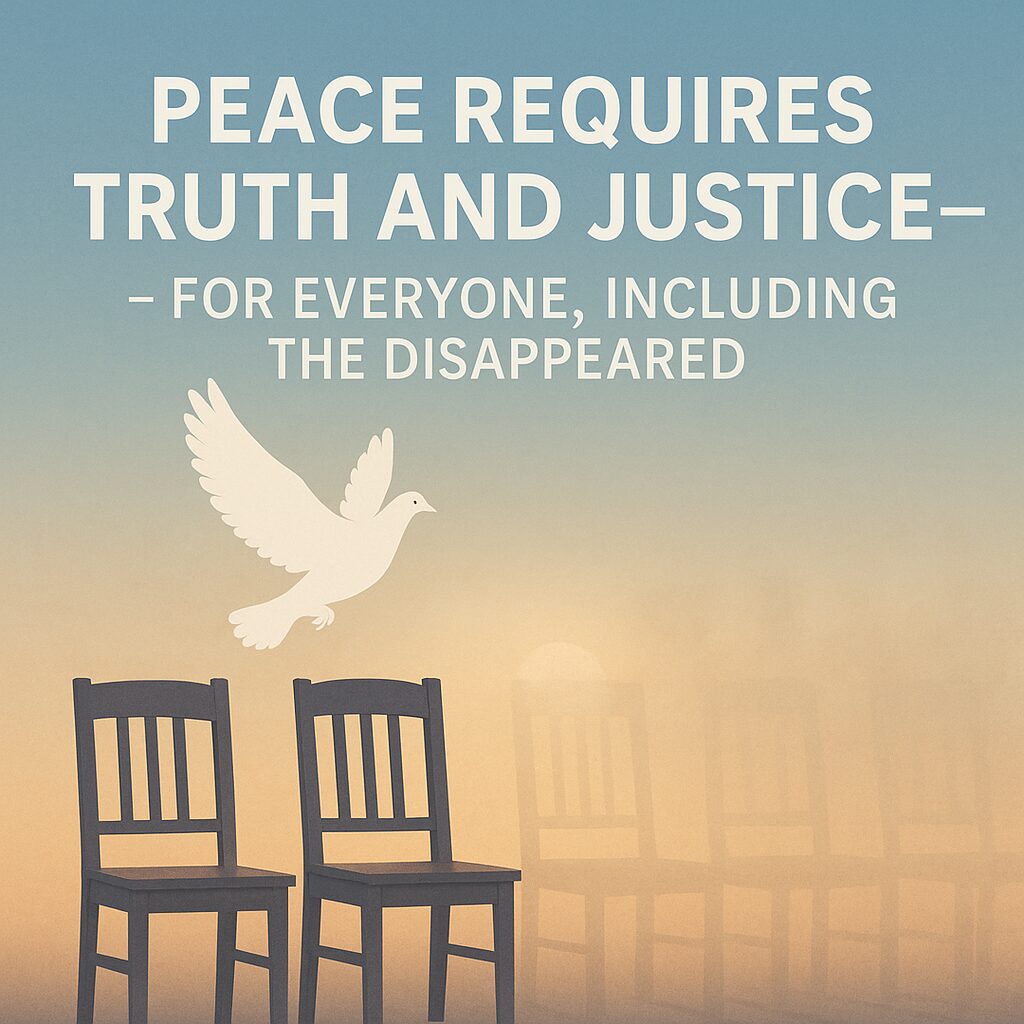
On September 21, the world observed the International Day of Peace, a United Nations–sanctioned day first declared in 1981. Conceived as a moment to “strengthen the ideals of peace and alleviate the tensions and causes of conflict,” it offers an annual opportunity to reflect on both the meaning of peace and the obstacles that continue to stand in its way.
One of the most pressing of these obstacles is the practice of enforced disappearance—among the gravest human rights violations of our time. The European Research Council–funded project Disappearing Act (DISACT) confronts this issue by investigating how enforced disappearances have been deployed across contexts of violence: from colonial rule to contemporary conflicts, transnational repression, and post-conflict societies. What unites these diverse cases is the absence—or fragility—of peace.
By examining enforced disappearances comparatively, DISACT seeks to uncover their strategic logic as well as their long-term political and social consequences. Beyond the profound suffering of families left without answers, disappearances erode communities, fracture trust in institutions, and deepen social trauma. These effects often fuel further conflict, undermining prospects for reconciliation.
In societies emerging from conflict, enforced disappearances present a direct challenge to transitional justice. Without truth and accountability, reconciliation remains incomplete and the foundations of a lasting peace remain fragile.
As we reflect on this year’s International Day of Peace, DISACT underscores the urgency of acknowledging and addressing enforced disappearances. Confronting these hidden crimes is essential not only for justice but also for building resilient peace and preventing future cycles of violence.